The Phipps Family — A Century in the Sport, and the Family Office That Invented the Category

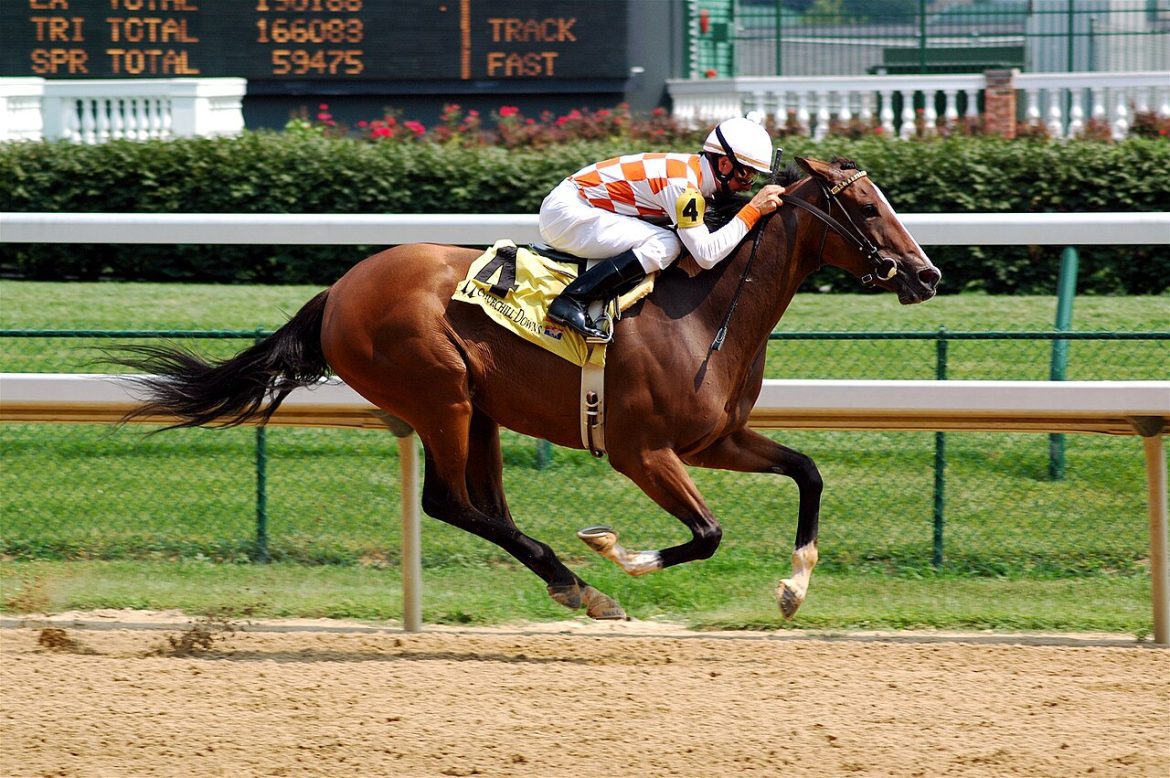
Photo: Jeff Kubina / edit by Pharaoh Hound via Wikimedia Commons (CC BY-SA 2.0).
If American horse racing has a royal family, it is the Phippses — and the family is intertwined with what may be the original American family office.
The fortune traces to Henry Phipps, Andrew Carnegie’s partner in the iron and steel business that became U.S. Steel. In 1907, the Phipps family established Bessemer Trust as a private vehicle to manage their wealth — the institution that today defines the multi-family office category and manages well over $200 billion for its client families. Nineteen years later, in 1926, Gladys Mills Phipps founded Wheatley Stable, and the family’s parallel century in thoroughbred racing began.
The roll call of horses bred by the Phippses reads like a sport-defining anthology: Seabiscuit. Bold Ruler — sire of Secretariat. Buckpasser. Easy Goer. Personal Ensign, who retired undefeated at 13-for-13. More than 300 stakes winners. Twenty-nine champions. Eight Hall of Famers.
What the family did not have, for the first 87 years of its racing operation, was a Kentucky Derby winner. Dinny Phipps — chairman of Bessemer Trust until 1994, and chairman of The Jockey Club for an unprecedented 32 years — finally broke that streak in 2013 with Orb, co-bred and co-owned with his cousin Stuart Janney III.
Then came May 2, 2026. With Dinny’s son Ogden Phipps II and daughter Daisy Phipps Pulito now running the stable, the Phipps family’s homebred Golden Tempo — a son of Curlin trained by Cherie DeVaux — surged past 17 horses to win the 152nd Kentucky Derby at 23-1. The win marked a fourth successive generation of Phipps Triple Crown victories, and made DeVaux the first woman to train a Derby winner. It was campaigned in partnership with St. Elias Stable (more on them below).
“It’s a family hobby,” Ogden Phipps II told reporters from the Churchill Downs winner’s circle. “This is in our blood.”
Family office angle: Bessemer Trust is the archetype — the case study other family offices study. Phipps Stable is what a hundred years of patient, generational capital looks like when channeled into a passion asset. Of the four operations in this article, no one is closer to the textbook definition of a single-family office.
Sheikh Mohammed bin Rashid Al Maktoum — Godolphin and the Sovereign-Wealth Approach

If the Phippses represent the family office at its most American and most patient, Godolphin represents what private capital looks like when there is essentially no constraint on it.
Godolphin is the global racing operation of Sheikh Mohammed bin Rashid Al Maktoum, the ruler of Dubai and Prime Minister and Vice President of the United Arab Emirates. The operation he founded in 1992 is now the largest thoroughbred breeder in North America — and probably the world — and has won the Eclipse Award for outstanding breeder five times, including four years running.
Sheikh Mohammed pursued the Kentucky Derby for more than three decades without winning it. Thirteen Derby starts. Zero victories. A near-miss in 2021 with Essential Quality, promoted to third on disqualification, was the closest he had come.
That ended on May 3, 2025. Godolphin’s homebred Sovereignty, a son of Into Mischief trained by 71-year-old Hall of Famer Bill Mott, splashed home through a sloppy track to beat heavy favorite Journalism in the 151st Kentucky Derby. Sovereignty went on to win the Belmont Stakes as well, then the Jim Dandy, then the Travers by 10 lengths. The colt is the leading candidate for 2025 Horse of the Year and has been kept in training as a four-year-old for 2026 — a rarity among Derby winners in the modern era.
The Derby weekend underscored the scale of the Godolphin machine. The same Saturday Sovereignty took the Derby, the operation’s filly Good Cheer won the Kentucky Oaks — making Godolphin the first owner since Calumet Farm in 1952 to sweep both classics in the same weekend. And earlier that morning, Godolphin’s Ruling Court had won the 2,000 Guineas in Britain.
Family office angle: Godolphin is what happens when a family enterprise has access to sovereign-scale capital, a 30-year planning horizon, and a willingness to keep spending through 13 losing Derby attempts. It is the high end of the “passion asset” spectrum — patient, global, and operated like a strategic platform rather than a hobby.
John Magnier & the Coolmore Partners — The Irish Breeding Empire

If Godolphin is the only operation in the world that can credibly say it is bigger than Coolmore, Coolmore is the only operation in the world that can credibly say it is bigger than Godolphin. The two have spent 30 years trading the title of preeminent global thoroughbred enterprise.
Coolmore is built around the partnership of three principals: John Magnier, the Irish magnate who serves as managing partner of Coolmore Stud; Michael Tabor, who sold his 114-shop British betting chain Prince Arthur in 1995 and reinvested the proceeds in horses; and Derrick Smith, a former Ladbrokes bookmaker who made his fortune in property and currency trading. (Magnier’s wife Susan — daughter of legendary Irish trainer Vincent O’Brien — is also a principal and appears on most ownership lines.)
Coolmore’s American Kentucky Derby breakthrough came early. Michael Tabor’s Thunder Gulch won the 1995 Derby — the colt he had bought privately the previous fall — and the partnership has been a fixture in major American stakes races ever since. They have also won, in various combinations, nearly every Classic race in Europe and Australia, and a long list of Breeders’ Cup races, with horses including Mendelssohn, Highland Reel, Found, St. Nicholas Abbey, Golden Pal, and most recently Sierra Leone, who won the 2024 Breeders’ Cup Classic after finishing a nose second in the 2024 Kentucky Derby.
The partners also took a piece of Journalism, the 2025 Derby favorite who finished second to Sovereignty in that race — and arranged for Journalism to stand at stud at Coolmore’s Ashford Stud in Kentucky upon retirement. That deal alone tells the story of the Coolmore model: campaign the colt while he is racing, control the breeding rights after.
Family office angle: Coolmore is the case where a closely-held private partnership has been built into something approaching a vertically integrated breeding industrial. The wealth is private. The horizon is multi-decade. The operating discipline — buy the best, race the best, breed the best — has more in common with how a sophisticated PE firm thinks about platform companies than it does with how most racing fans imagine the sport.
Vincent Viola — St. Elias Stable and the Wall Street Family Office Goes to Churchill Downs

If the Phippses are old American money and Godolphin is sovereign money, Vincent Viola is what happens when self-made Wall Street money finds the Derby.
Viola, 70, is the son of an Italian-immigrant truck driver from Williamsburg, Brooklyn. He graduated from West Point, served in the Army, and built one of the great electronic-trading fortunes of his generation — first as a partner in the firms EWT and Madison Tyler, then as founder of Virtu Financial, which he took public on NASDAQ in 2015. He served as chairman of the New York Mercantile Exchange from 2001 to 2004, where he is credited with leading the exchange’s reopening after the September 11 attacks. Forbes pegs his net worth at over $7 billion.
In 2013 he bought the NHL’s Florida Panthers, who have since won the Stanley Cup in 2024 and 2025. And through St. Elias Stable — and his wife Teresa Viola’s parallel Teresa Viola Racing — he has built one of the most successful thoroughbred operations in the country in less than 15 years.
The Viola Derby résumé is now extraordinary. In 2017, his Always Dreaming, co-owned with fellow Brooklynite Anthony Bonomo, won the Kentucky Derby and the Florida Derby. In 2019, Vino Rosso won the Breeders’ Cup Classic. In 2023, Forte won the Florida Derby. And on May 2, 2026, St. Elias was on the winning ticket for the Kentucky Derby a second time — as co-owner, with Phipps Stable, of Golden Tempo.
The Phipps–Viola partnership is itself a study in how modern racing capital actually flows. The two families first crossed paths when St. Elias partnered with Repole Stable on a $725,000 yearling at the 2019 Keeneland September Sale — a Phipps-bred colt named Dynamic One. Viola offered a piece of his share back to the Phipps family. Seven years later, the same kind of handshake delivered the Derby trophy.
Family office angle: Viola is the bridge case — first-generation Wall Street money operating with the same patience and partnership discipline that families like the Phippses have refined over a century. It is also, notably, a Florida-anchored operation, which matters for anyone watching where new racing capital is taking root in the Southeast.
Why This Matters for Family Offices Watching the Sport
Thoroughbred racing has always been a passion asset more than an investment thesis. Returns on a winning Derby colt — especially after stud rights are negotiated — can be extraordinary, but they are highly path-dependent, and the median outcome on any given yearling purchase is a loss. What the four operations above share is not a return profile; it is a structural one:
- Multi-decade horizons. Three of the four operations have been running for more than 30 years. The Phippses have been running for a hundred.
- Vertical integration. All four breed, race, and control stallion or broodmare rights. The economic upside is overwhelmingly in the breeding side, not the purse.
- Partnership structures. Even the wealthiest single families partner. Phipps with Janney, then with Viola. Coolmore is itself a partnership. Even Godolphin, with effectively unlimited capital, regularly campaigns horses jointly.
- Generational handoff. The Phipps stable is on its fourth generation. Coolmore’s M.V. Magnier represents the next generation of the Magnier family. Sheikh Mohammed’s family operates Godolphin as a multi-generational enterprise. Teresa Viola runs her own racing arm alongside her husband’s.
For family offices considering an entry into the sport — or simply trying to understand who the buyers are at the next Keeneland sale — these four operations are the map.
Family Office Networks tracks how patient family capital is deployed across passion assets, alternative media, and the institutions that shape both. To receive future briefings, subscribe here.